We use essential storage to run PoliticaHub. Under EU and Swedish rules, analytics and advertising stay off unless you actively allow them. Analytics includes Google Analytics plus Microsoft Clarity session recordings and heatmaps. Advertising consent is also required before any personalized Google ads can load. Privacy Policy.
The Sunday briefing, from North
One email a week. Elections worth watching, sharpest pages of the week, the thing most people misread about a country you'd recognise. No hot takes, no churn.
One email a week. Unsubscribe anytime — I don't take it personally.
Sweden vs Norway: Government & Political System Compared (2026) | PoliticaHub
Sweden vs Norway: Government & Political System Compared
Two Nordic constitutional monarchies with strong welfare states and coalition politics, but with meaningful differences in parliamentary structure, party competition, and the way governments are formed.
Both are parliamentary monarchies rated "Free" — Sweden is in the EU and NATO; Norway is in NATO but not the EU, and is significantly wealthier per capita due to oil revenues.
Sweden (King Carl XVI Gustaf, PM Ulf Kristersson) and Norway (King Harald V, PM Jonas Gahr Støre) are both parliamentary constitutional monarchies. Key differences: Sweden joined NATO in March 2024 after 200 years of non-alignment; Norway has been a founding NATO member since 1949. Sweden is an EU member; Norway is not (it participates through the EEA). Norway has the world's largest sovereign wealth fund (~$1.7 trillion) from oil revenues; Sweden has no equivalent. Both are rated "Free."
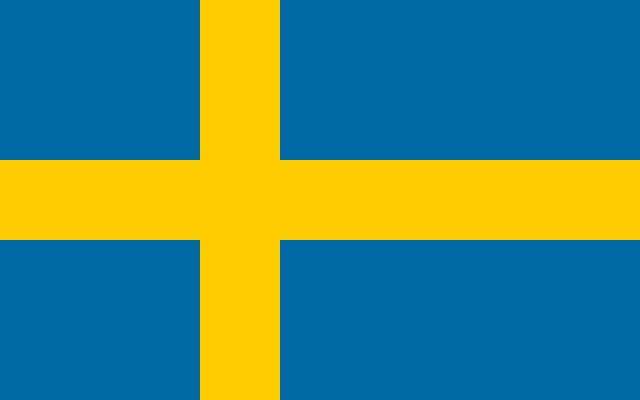
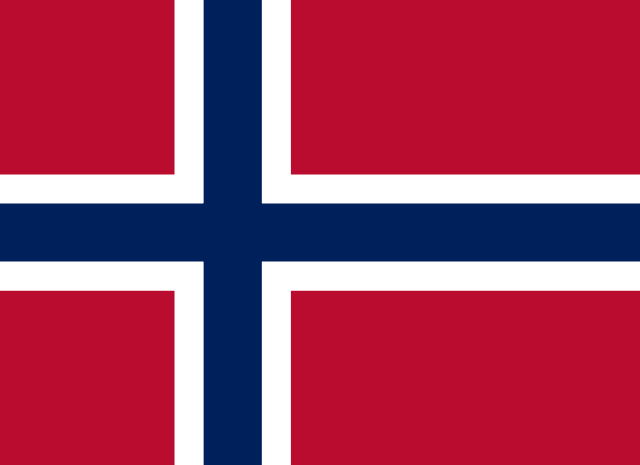
This section pulls the most useful structured facts onto one screen: flags, capital cities, system type, current leaders, election links, and how many parties and institutions the graph already connects to each country.
🇸🇪 Sweden
Constitutional monarchy in Northern Europe. Known for its welfare state model and multi-party parliamentary system.
Capital: StockholmGovernment: Unitary parliamentary constitutional monarchyPopulation: 10.5 millionLegislature: RiksdagExecutive: Prime minister nominated by the Speaker of the Riksdag and confirmed through a negative parliamentarism system where a majority must not vote against the candidate.
Capital: OsloGovernment: representative democracyPopulation: 5.6 million
Current Leaders
No current leader timeline is attached yet.
Election Route
Upcoming
No upcoming election is attached yet.
Graph Coverage
77 linked parties
1 linked institutions
2 linked offices
2 tracked elections
🇸🇪 Sweden
🇳🇴 Norway
Description
Constitutional monarchy in Northern Europe. Known for its welfare state model and multi-party parliamentary system.
country in Northern Europe
Country
SE
NO
Continent
Europe
Europe
Capital
Stockholm
Oslo
Government
Unitary parliamentary constitutional monarchy
representative democracy
Population
10.5 million
5.6 million
Legislature
Riksdag
—
Shared model, different political texture
Sweden and Norway are both parliamentary constitutional monarchies, and both combine high-trust institutions with multi-party competition and coalition bargaining. That similarity makes them easy to group together, but it can also hide real differences in how governments are assembled and how parties compete.
Government formation and parliamentary arithmetic
In both systems, the monarch is ceremonial and governing power rests with the prime minister and cabinet backed by parliament. Sweden's process gives the Speaker of the Riksdag a visible role in testing support for a prime ministerial candidate, while Norway's governments have often been shaped by a mix of minority cabinets and negotiated parliamentary support rather than fixed majority coalitions.
Party systems and coalition habits
Both countries operate under proportional representation, which encourages multiple viable parties and makes coalition politics normal. Sweden's party system has become more polarized around the rise of the Sweden Democrats, while Norway's party competition has long revolved around shifting centre-left and centre-right governing combinations with stronger routines of minority government.
Why the comparison matters
This comparison is useful because it shows that even two closely related Nordic democracies can organize executive power, party bargaining, and parliamentary support in meaningfully different ways. It is a strong entry point for readers trying to understand coalition democracies beyond the simple label of "parliamentary system."
What is the difference between Sweden and Norway's government?
Both are parliamentary constitutional monarchies with prime ministers as head of government. Sweden is in the EU; Norway is not. Norway joined NATO at founding; Sweden only joined in 2024.
Is Norway richer than Sweden?
Yes, per capita. Norway's sovereign wealth fund and oil revenues give it GDP per capita significantly higher than Sweden's. Both are among the world's wealthiest nations.
Is Norway in the EU?
No. Norway is not an EU member, having rejected membership in referendums (1972 and 1994). It participates in the EU single market through the EEA agreement.
When did Sweden join NATO?
Sweden officially joined NATO in March 2024, ending over 200 years of military non-alignment following Russia's full-scale invasion of Ukraine in 2022.
Prime minister nominated by the Speaker of the Riksdag and confirmed through a negative parliamentarism system where a majority must not vote against the candidate.
—
Current leaders
Prime Minister of Sweden: Ulf Kristersson (2022-10-18)