Quick Facts
- Population: approximately 27 million
- Canberra is the capital of this federal parliamentary constitutional monarchy
- The national legislature is the Parliament (House of Representatives and Senate)
- 2 elections tracked in the database
- 2 political parties recorded
Next Election
Australia will next vote in 2028 through Australia 2028 Federal Election.
System Snapshot
The fastest way to understand how authority is arranged before you dive into timelines and entities.
- Government Type
- Federal parliamentary constitutional monarchy
- Executive Structure
- Westminster system with compulsory voting and a powerful elected Senate. The governor-general is the head of state's representative. The Senate uses proportional representation, often producing a different partisan balance from the House.
- Legislature
- Parliament (House of Representatives and Senate)
- Next Tracked Election
- Australia 2028 Federal Election (2028)
Dig Deeper
Go beyond the overview and trace how power actually moves through Australia.
Current leadership
See who currently holds executive power and which offices matter.
Next election
Jump straight to the next tracked vote for Australia.
Party competition
Browse 2 connected parties and follow their role in the system.
Institutions and offices
Explore the 4 institutions and offices where authority is formally exercised.
Power Profile
Power shared between monarch and elected government
Citizens elect parliament; monarch retains key prerogatives
Split between hereditary and elected institutions
Derived from system type and role classification
Position in System
Australia operates as a constitutional monarchy where a hereditary head of state shares governance with elected institutions. Political power flows through both the monarchy and parliamentary structures, with the balance between them defining the country's political character.
At a Glance
Australia is a federal parliamentary constitutional monarchy in Oceania. Its capital is Canberra and it has an approximate population of 27 million.
As a constitutional monarchy, Australia combines hereditary leadership with elected government. The monarch remains head of state, but day-to-day governing usually sits with parliament and the prime minister, with the real balance depending on the constitution and political practice.
The national legislature is the Parliament (House of Representatives and Senate). The country's political landscape includes 2 elections, 2 political parties, and 2 offices.
Verdict: Australia is a federal parliamentary constitutional monarchy with compulsory voting and strong state governments.
Australia is a federal parliamentary constitutional monarchy. The monarch (represented by the Governor-General) is head of state, while the prime minister leads the government. Anthony Albanese (Labor) has been prime minister since 2022 and was re-elected in 2025. Australia is notable for compulsory voting and a preferential (ranked-choice) ballot system.
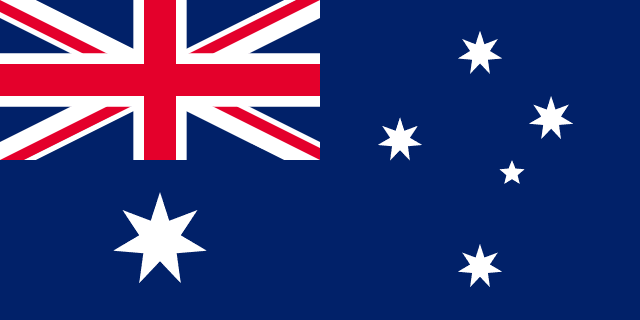
This page covers Australia's Westminster-derived system, compulsory voting, the two-party preferred system, and recent election outcomes.
Power Snapshot
Australia is modernizing its defense posture through AUKUS, including plans for nuclear-powered submarines to strengthen its Indo-Pacific presence.
Australia
- Military Strength
- High
- Defense Budget
- ~$32 billion
- Active Personnel
- ~59,000
- Global Influence
- Medium
Key insight: Australia is modernizing its defense posture through AUKUS, including nuclear-powered submarine acquisition, to address Indo-Pacific security.
Defense spending uses SIPRI-backed 2024 estimates; personnel uses IISS-backed counts.
Keep Exploring
Political Parties
Explore
Government
Current leadership, institutions, and offices
Political System
How the state, legislature, and elections fit together
Prime Ministers
PM succession history
All Elections
2 elections tracked
Parties
2 parties tracked
Offices
2 offices tracked
Institutions
2 institutions
Politicians
All connected politicians
Executive Structure
Westminster system with compulsory voting and a powerful elected Senate. The governor-general is the head of state's representative. The Senate uses proportional representation, often producing a different partisan balance from the House.
Current constitutional order since 1901
Frequently Asked Questions
- What type of government does Australia have?
- Australia is a federal parliamentary constitutional monarchy. It has a bicameral parliament (House of Representatives and Senate), six states and two territories, and shares the British Crown as head of state.
- Who is the current prime minister of Australia?
- Anthony Albanese (Australian Labor Party) has been Prime Minister since May 2022 and was re-elected in the 2025 federal election.
- Does Australia have compulsory voting?
- Yes. Voting is compulsory for all Australian citizens aged 18 and over. Failure to vote can result in a fine. This consistently produces turnout above 90%.
- What are the main political parties in Australia?
- The two major forces are the Australian Labor Party (centre-left) and the Liberal-National Coalition (centre-right). The Greens and independents (especially "teal independents") have growing influence.
- How does Australia's preferential voting work?
- Voters rank candidates in order of preference. If no candidate wins a majority of first-preference votes, the candidate with the fewest votes is eliminated and their preferences are redistributed until one candidate has a majority.
- Is Australia a democracy or a monarchy?
- Australia is a constitutional monarchy, which means it combines monarchical and democratic elements. While the monarch serves as head of state, elected representatives participate in governance through a parliament or similar legislative body.
Recommended Reading
A Short History of Australia
Geoffrey Blainey
The essential introduction to Australia's political and social history.
View on AmazonThe Shortest History of Germany
James Hawes
A fast, vivid survey of Germany's political story from Caesar to Merkel.
View on AmazonThe Federalist Papers
Alexander Hamilton, James Madison & John Jay
The foundational arguments for the U.S. Constitution, still shaping American political debate.
View on AmazonThe English Constitution
Walter Bagehot
The classic account of how Britain's unwritten constitution actually works.
View on AmazonAs an Amazon Associate, PoliticaHub earns from qualifying purchases.
Connections
Elections
Institutions
Parties
Trust & Coverage
- Page Type
- Country
- Last Updated
- March 21, 2026
- Sources
- Graph-backed
- Data Coverage
- Comprehensive(85/100)
Country data is assembled from structured entity records, election results, and office timelines.
You Might Also Explore
Australia 2025 Federal Election
Australian federal election held May 2025. Anthony Albanese won a second term for Labor.
Australia 2028 Federal Election
Expected next Australian federal election by 2028 for the House of Representatives.
Australian House of Representatives
Lower house of the Parliament of Australia. Members are elected by preferential voting.
Parliament of Australia
bicameral national legislature of Australia
Australian Labor Party
Australia's main centre-left party. Oldest political party in the country with close ties to unions.
Liberal Party of Australia
Australia's main centre-right party, typically allied with the National Party in the Coalition.