
US vs China: Trade War, AI, Military & Power Compared
People's Republic of China runs as a unitary one-party socialist republic; United States as a federal presidential constitutional republic. Same word — country — built two different ways.
ByNorth
The US still leads in alliances and global force projection; China leads in industrial scale, manufacturing depth, and regional mass.
The United States and China are the two central powers in today's international system, but they are organized on opposite political logics. The US is a federal presidential democracy with competitive elections, global alliances, and unmatched force projection. China is a one-party state run by the Chinese Communist Party with stronger centralized control, manufacturing scale, and regional mass. The key comparison is not just who is bigger overall, but who has the edge in military reach, trade leverage, semiconductor chokepoints, AI capacity, and alliance depth.
Most searchers comparing the US and China want a straight answer on power, trade-war pressure, military balance, and the AI race. This page is built to answer those questions quickly before going deeper into how the rivalry actually works.
The two largest defense budgets in the world — the US spends roughly three times what China officially reports.
China
- Military Strength
- Peer challenger
- Defense Budget
- ~$296 billion
- Active Personnel
- ~2,035,000
- Global Influence
- Very High
Key insight. The PLA has been transformed by industrial policy and party-directed modernization — record shipbuilding, missile forces, cyber capacity. The gap to the US remains real, and the PLA has limited recent combat experience.
United States
- Military Strength
- Unmatched
- Defense Budget
- ~$886 billion
- Active Personnel
- ~1,328,000
- Global Influence
- Very High
Key insight. The only military with truly global force projection: the largest defense budget on earth, a worldwide network of bases, the full nuclear triad, and the alliance command structures other powers plug into.
Defense spending uses SIPRI-backed 2024 estimates; personnel uses IISS-backed counts.
This is the rare comparison where nearly every rivalry lens is real at the same time: system contrast, trade conflict, technology competition, military signaling, alliance positioning, and nonstop media framing.
Drama
Global-system rivalryWashington and Beijing are now the default reference points for 21st-century great-power competition. Even when the immediate dispute is tariffs, chips, Taiwan, or TikTok, the deeper story is about who sets the rules of the next international order.
Ideological Contrast
Near-maximum contrastThe U.S. sells itself as a constitutional democracy built on separated powers and open political competition. China presents a one-party state that prioritizes party control, long-horizon planning, and state capacity over liberal pluralism.
Military Tension
U.S. alliance reach, China regional proximityThis is not a hot war, but it is a live deterrence contest. The U.S. still has superior alliance architecture, blue-water reach, and combat experience; China has mass, missile density, shipbuilding scale, and the home-field advantage in a Taiwan or South China Sea crisis.
Trade War
Mutual coercion, different leverageTrade is no longer just trade here. Tariffs, export controls, sanctions risk, supply-chain rewiring, and de-risking language have turned commerce into strategic competition. The U.S. has stronger leverage in finance and advanced tooling; China has stronger leverage in manufacturing depth and industrial dependence.
AI Race
U.S. frontier-model edge, China scale-and-state-capacity edgeThe U.S. still leads in top-end model ecosystems, cloud concentration, and key semiconductor chokepoints through firms and allied tooling networks. China counters with industrial policy, state-backed compute mobilization, surveillance deployment, and a far larger manufacturing base for diffusion at scale.
Alliance Systems
U.S. edgeThis is one of America’s clearest structural advantages. NATO, Japan, South Korea, Australia, the Philippines, and wider partner networks give Washington diplomatic depth that China still cannot match, even with its economic reach across the Global South.
Media Narratives
Mutual amplificationVery few rivalries are narrated as aggressively as this one. American media frames China as the main strategic challenger; Chinese state media frames U.S. power as containment. That constant story loop makes the pair feel even hotter than every underlying dispute on its own.
Reality check. The internet often treats U.S.-China competition as if war is inevitable. It is not. The real pattern is sustained rivalry under nuclear deterrence, economic interdependence, and repeated attempts to compete hard without losing full control of escalation.
Bottom line. The U.S. still leads in alliance depth, reserve-currency power, and global force projection. China leads in manufacturing scale, regional mass, and state-directed industrial execution. That is why the rivalry feels total: each side dominates in different layers of power.
- United StatesSee the full US political profile — government, parties, and elections.
- ChinaSee China's political system, party structure, and leadership.
- US Political SystemUnderstand how the presidency, Congress, and courts share power.
- China Political SystemSee how the CCP, State Council, and NPC interact.
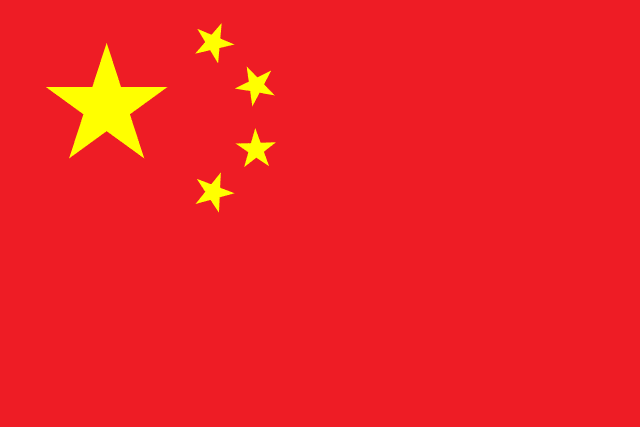
People's Republic of China
Single-party socialist state led by the Chinese Communist Party and one of the two central poles of global power. China combines party control, state planning capacity, export-industrial strength, technological ambition, and a vast domestic market, making its political decisions consequential for global trade, security, supply chains, and regional power balances.
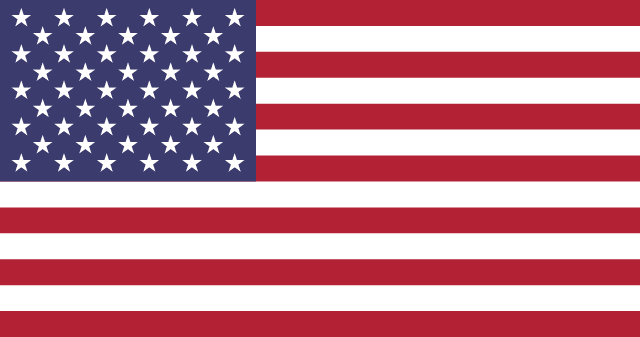
United States
Federal presidential republic and the world's largest economy, with power divided among the presidency, Congress, the states, and the federal courts. U.S. politics is highly polarized, two-party dominated, and globally consequential because decisions made in Washington shape finance, trade, security alliances, technology regulation, and military power far beyond U.S. borders.
Country Snapshot
This section pulls the most useful structured facts onto one screen: flags, capital cities, system type, current leaders, election links, and how many parties and institutions the graph already connects to each country.
🇨🇳 People's Republic of China
Single-party socialist state led by the Chinese Communist Party and one of the two central poles of global power. China combines party control, state planning capacity, export-industrial strength, technological ambition, and a vast domestic market, making its political decisions consequential for global trade, security, supply chains, and regional power balances.
Current Leaders
Election Route
🇺🇸 United States
Federal presidential republic and the world's largest economy, with power divided among the presidency, Congress, the states, and the federal courts. U.S. politics is highly polarized, two-party dominated, and globally consequential because decisions made in Washington shape finance, trade, security alliances, technology regulation, and military power far beyond U.S. borders.
Current Leaders
Election Route
How their governments are structured
People's Republic of China is a unitary one-party socialist republic; United States is a federal presidential constitutional republic. The first practical split is federalism: United States is a federation, so legislative power is shared with constituent states or Länder, and a single national majority can be blocked by sub-national institutions and courts. People's Republic of China is unitary — the central government can change policy nationwide without negotiating with state-level legislatures. The second split is how the executive is chosen. People's Republic of China runs a one-party system: a single ruling party controls the executive, legislature, and most state institutions, and competitive national elections for top leadership do not occur. United States runs a presidential system: the head of state and head of government are the same elected office, with a fixed term that the legislature cannot end through ordinary votes. The practical effect is that the presidential side has fixed terms and an executive that cannot be removed by the legislature short of impeachment, while the parliamentary side can replace the head of government mid-term through a confidence vote. How the executive actually works: in People's Republic of China, the Chinese Communist Party is the sole governing party. The General Secretary of the CCP is the paramount leader, simultaneously holding the state presidency and chairmanship of the Central Military Commission. The premier leads the State Council (cabinet). The National People's Congress is the formal legislature but in practice ratifies CCP decisions. Real power resides in the Politburo Standing Committee. In United States, directly elected president with separately elected Congress and an independently elected vice president on a joint ticket
Legislative power and representation
People's Republic of China's national legislature is the National People's Congress; United States's is the United States Congress.
Constitutional foundations
The age and origin of a country's constitution reveals much about its political DNA. United States's constitutional order dates to 1788, making it 194 years older than People's Republic of China's (1982). Older constitutions tend to accumulate amendments and judicial interpretations, while newer ones often reflect lessons learned from previous political crises.
Scale, geography, and context
People's Republic of China's political capital is Beijing, while United States is governed from Washington, D.C.. With a population of approximately 1.4 billion, People's Republic of China faces a different scale of governance challenge compared to United States's 335 million. Population size shapes everything: the complexity of electoral systems, the number of administrative layers required, the diversity of constituencies that must be represented, and the sheer logistical challenge of running a democracy. Geographically, People's Republic of China sits in Asia while United States is in North America, placing them in different regional political contexts and international alliance structures.
The political landscape
United States's field is wider: 578 tracked parties against 73 in People's Republic of China. More parties usually means coalitions get harder and majorities get scarce. The electoral record shows 3 tracked elections for People's Republic of China and 28 for United States. Electoral frequency and type reveal how regularly citizens exercise direct democratic choice. People's Republic of China has 5 tracked political offices, while United States has 5, indicating different levels of institutional complexity.
Institutional architecture
People's Republic of China has 2 major political institutions tracked in our database, while United States has 5. The institutional architecture of a country — its courts, legislatures, executive bodies, and regulatory agencies — determines how power is distributed, how conflicts are resolved, and how policy is implemented. More institutions often means more checks and balances, but also more veto points where reform can stall.
Where they actually split
People's Republic of China runs as a unitary one-party socialist republic; United States runs as a federal presidential constitutional republic. That single difference rewrites how everything else plays out. Executive wiring is different: People's Republic of China uses the chinese communist party is the sole governing party. the general secretary of the ccp is the paramount leader, simultaneously holding the state presidency and chairmanship of the central military commission. the premier leads the state council (cabinet). the national people's congress is the formal legislature but in practice ratifies ccp decisions. real power resides in the politburo standing committee., United States uses directly elected president with separately elected congress and an independently elected vice president on a joint ticket. Scale matters: People's Republic of China has ~1.4 billion people; United States has ~335 million. That changes the politics of every issue. The party landscape differs significantly: People's Republic of China has 73 tracked parties, while United States has 578, reflecting different levels of political pluralism.
Follow This Comparison Into The Graph
Frequently Asked Questions
- Who is stronger overall: the US or China?
- The US still has the broader alliance system, reserve-currency power, and global military reach. China has the stronger industrial base, larger manufacturing share, and more concentrated regional mass. The answer depends on which layer of power you care about most.
- Is US vs China mainly about trade or military power?
- It is both. Tariffs, export controls, and supply-chain pressure are one front; Taiwan, the South China Sea, and force projection are another. The rivalry matters because economic and military competition now reinforce each other.
- Who is ahead in the AI race: the US or China?
- The US still has the edge in frontier models, cloud concentration, and top-end semiconductor tooling networks. China remains formidable in industrial scale, state-backed deployment, surveillance applications, and turning technology into national strategy.
- Do the US and China have the same type of government?
- No. The US is a constitutional democracy with competitive elections and separated powers. China is a one-party state where the CCP sits above the rest of the political system.
Related Entities
All comparisonsA4 Alliance
political alliance in Hong Kong
Alliance for Change
political party in Macau
Alliance of Resuming British Sovereignty over Hong Kong and Independence
political party in Hong Kong
Association for Democracy and Social Well-Being of Macau
political party in Macau
Association for Helping the Community and Engagement with the People
Political party in People's Republic of China.
Bauhinia Party
Hong Kong pro-Beijing conservative political party
Abortion
Legal and political frameworks governing access to abortion services. One of the most contested social policy issues globally, intersecting with religion, women's rights, and constitutional law.
Page Feedback