Egypt is the Arab world's most populous country and its most consequential case of democratic reversal — a nation where the 2011 revolution briefly opened the possibility of democratic governance before the military reasserted control through a system that combines formal electoral institutions with security-state dominance.
Why Egypt Is Structurally Important
Egypt matters for comparative politics because it is the most important case of a failed democratic transition in the twenty-first century and the clearest illustration of how military establishments can restore authoritarian control through constitutional means after a revolutionary opening. The January 25 Revolution of 2011 — which toppled Hosni Mubarak after thirty years of rule — was the most consequential event of the Arab Spring and appeared to open a path toward competitive democracy in the region's largest and most influential country. The subsequent sequence — free elections that brought the Muslim Brotherhood to power, Mohamed Morsi's turbulent presidency, a massive popular backlash, and Abdel Fattah el-Sisi's military coup in July 2013 — compressed the entire cycle of democratic opening, Islamist governance, and authoritarian restoration into barely two years, producing lessons about civil-military relations, Islamist politics, and democratic consolidation that are still being analyzed.
For comparative scholars, Egypt demonstrates three critical dynamics. First, the durability of the military as a political and economic actor: the Egyptian Armed Forces control an estimated 25-40% of the national economy through industrial enterprises, real estate development, construction, and consumer goods, making them not just a security institution but an economic bloc with material interests in maintaining political control. Second, the Islamist dilemma: the Muslim Brotherhood's victory in free elections and subsequent removal raised the unresolved question of whether political Islam can participate in democratic governance, and whether secular and military actors will permit it to do so. Third, the limitations of popular mobilization: the 2011 revolution demonstrated that mass protests can topple dictators but cannot, by themselves, create the institutions, coalitions, and constitutional frameworks necessary to sustain democratic governance against organized incumbents.
The Presidency, the Military, and the Security Architecture
Egypt's 2014 constitution — drafted after the military's removal of Morsi and approved by referendum — creates a presidential republic with a strong executive. The president is directly elected for six-year terms (extended from four by a 2019 amendment that also allowed Sisi to run for a third term), commands the armed forces, appoints the prime minister and cabinet, and exercises extensive emergency powers. But the formal constitutional architecture understates the concentration of power: the presidency under Sisi operates through a security apparatus that includes the General Intelligence Service, Military Intelligence, the National Security Agency, and the Administrative Control Authority — overlapping institutions that monitor, repress, and manage political activity with a degree of sophistication that makes Egypt one of the most controlled political environments in the world.
The military's role transcends its security function. Constitutional provisions grant the armed forces a special status: the defense minister must be a military officer, the Supreme Council of the Armed Forces must approve the defense budget, and military courts retain jurisdiction over cases involving military personnel and facilities — a provision that has been used to try civilians. More importantly, the military's economic empire gives its officer corps a direct financial stake in regime continuity, because the enterprises they control operate outside civilian oversight, taxation, and parliamentary scrutiny. This creates what scholars call a praetorian state — a system where the military is not just a tool of government but a governing partner whose institutional interests shape everything from foreign policy and infrastructure investment to labor relations and land use. Understanding Egyptian politics requires understanding that the Sisi presidency is not a personal dictatorship but an institutional arrangement where the military establishment governs through a presidential figure.
The Opposition Vacuum and the Politics of Survival
Egypt's political landscape since 2013 is defined by the systematic elimination of organized opposition. The Muslim Brotherhood — the most organized political force in the country, with decades of grassroots mobilization, social services, and electoral infrastructure — was designated a terrorist organization, its leadership imprisoned or exiled, and its assets seized. Secular liberal movements that participated in the 2011 revolution were similarly repressed, with activists jailed under draconian protest and cybercrime laws. Independent media outlets were closed, bought by intelligence-linked businessmen, or intimidated into self-censorship. NGOs were subjected to a legal framework that criminalizes foreign funding and subjects civil society organizations to security-service approval. The result is a political field where no organized opposition exists, elections are non-competitive, and the parliament functions as a rubber stamp for executive preferences.
This does not mean that Egyptian politics is entirely static. Sisi faces genuine governance challenges that create pressure even in the absence of organized opposition: a population of over 105 million growing by approximately 2 million per year, chronic youth unemployment, a currency crisis that has required repeated IMF intervention, mega-projects like the new administrative capital that have absorbed billions in investment while basic public services deteriorate, and an external environment shaped by the Gaza conflict, Nile water disputes with Ethiopia over the Grand Ethiopian Renaissance Dam, and Libya's instability on the western border. The regime's stability depends not on popular support — which is difficult to measure in the absence of free expression — but on the military's cohesion, the security services' capacity to prevent mobilization, and the continued flow of financial support from Gulf allies, particularly Saudi Arabia and the UAE.
What Advanced Readers Should Watch
Advanced readers should track three dynamics. First, the economic crisis and its political implications: Egypt's debt burden, currency instability, and dependence on IMF programs and Gulf financial support create structural vulnerabilities that could become politically destabilizing if the regime cannot deliver basic economic stability. The population growth rate ensures that even modest GDP growth is consumed by demographic expansion, and the regime's preference for military-led mega-projects over investment in education, health care, and productive industry raises questions about long-term economic viability. Whether Sisi's economic model can generate sufficient growth and employment to prevent social unrest is the most important near-term question.
Second, watch the succession question. Sisi has centralized power to a degree that makes the system dependent on his continued leadership, but Egypt has no clear succession mechanism outside the military hierarchy. Whether the next transition will be managed through internal military selection (as in the Mubarak-to-SCAF-to-Sisi sequence) or will produce instability depends on the cohesion of the officer corps and the willingness of regional patrons to support a transition. Third, the Nile water dispute with Ethiopia is a genuinely existential issue for Egypt: the Grand Ethiopian Renaissance Dam threatens to reduce water flows that 100 million Egyptians depend on for agriculture, drinking water, and electricity generation. How Egypt manages this crisis — through diplomacy, coercion, or accommodation — will test the regime's strategic capacity and could reshape Egypt's relationship with the African continent and the broader international order.
Political Architecture
How Egypt Is Structured
The executive, legislature, elections, parties, and institutions that make up Egypt's political system — and how they connect.
Dig Deeper
Political Parties
All 159 parties25-30 Alliance
political party in Egypt
Al Ansar Party
political party in Egypt
Al-Nour Party
Egyptian political party
Al-Wasat Party
political party
Arab Democratic Nasserist Party
political party
Arab Party for Justice and Equality
political party
Frequently Asked Questions
- What type of government does Egypt have?
- Egypt is a republic. This system defines how executive, legislative, and judicial power is organized and exercised in the country.
- Who leads Egypt?
- Key political offices in Egypt include President of Egypt, Prime Minister of Egypt. These offices shape how executive, legislative, and judicial authority is exercised in the country.
- What is the capital of Egypt?
- The capital of Egypt is Cairo. As the seat of government, the capital is where the country's major political institutions and decision-making bodies are headquartered.
- What are the major political parties in Egypt?
- Egypt has 159 notable political parties, including 25-30 Alliance, Al Ansar Party, Al-Nour Party, Al-Wasat Party, Arab Democratic Nasserist Party. Party competition is central to how political power is distributed — electoral outcomes and coalition dynamics directly determine who governs and what policies are implemented.
- What is the population of Egypt?
- Egypt has a population of approximately 114.5 million. Population size affects the country's representation in international bodies, electoral district sizing, and the scale of its political institutions.
- What is the political history of Egypt?
- country in Northeast Africa and Southwest Asia
Recommended Reading
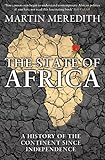
The State of Africa
Martin Meredith
Fifty years of independence — the successes, failures, and politics of a continent.
View on AmazonMandela: Long Walk to Freedom
Nelson Mandela
Mandela's autobiography — from prisoner to president to global symbol of reconciliation.
View on AmazonFrance: A Modern History from the Revolution to the War with Terror
Jonathan Fenby
Sweeping narrative of France's turbulent political journey from 1789 to the present.
View on AmazonThe Big Shift
John Ibbitson & Darrell Bricker
How immigration and urbanization are remaking Canadian politics.
View on AmazonAs an Amazon Associate, PoliticaHub earns from qualifying purchases.
Connections
Trust & Coverage
- Page Type
- Country
- Last Updated
- March 21, 2026
- Sources
- 2 linked
- Data Coverage
- Comprehensive(85/100)
Country data is assembled from structured entity records, election results, and office timelines.