Country Briefing
Germany Political System & Government Explained
Federal parliamentary republic in Central Europe. Largest economy in the EU with a multi-party coalition system.
Europe
Modern Germany was built to stop a democracy from destroying itself again. Its post-war constitution slows power down on purpose, pushes politics toward coalition and compromise, and gives courts and states enough weight to keep any single center from running away with the system.
Built Against The Memory Of Weimar
The Basic Law of 1949 was written with a very specific fear in mind: that democratic institutions could again be hollowed out from within. That is why Germany's system reduces the ceremonial president to a limited role, makes the chancellor dependent on parliamentary support but hard to remove casually, gives the Constitutional Court exceptional standing, and places clear limits on how anti-democratic actors can use democratic freedoms to break the order itself.
You can feel that design choice everywhere. German politics is not built around sudden presidential swings or winner-take-all mandates. It is built around caution, legalism, coalition bargaining, and institutional memory. Even when the party system gets noisy, the constitutional reflex is to absorb conflict through procedures rather than through permanent crisis theater.
Why Coalitions Are The System
No major German party expects to rule alone. Elections decide who leads the talks, but coalition negotiations decide how the country will actually be governed. Those talks matter because coalition agreements in Germany are not vague declarations of goodwill. They are operating documents that lay out priorities, compromises, and red lines in unusually fine detail.
That is also why the chancellor's office works differently from a presidential palace. A German chancellor can be powerful, but only by holding together a coalition and keeping partners invested in the arrangement. The constructive vote of no confidence reinforces that logic: a government should not fall just because parliament is angry; it should fall only when a replacement majority is ready. Stability is built into the system, but it is coalition stability, not personal rule.
Federalism With Teeth
Germany's sixteen Laender are not decorative. They implement much of federal law, run core administrative systems, and exert influence through the Bundesrat, where state governments can block or reshape legislation that affects their responsibilities. That means national leaders are never just bargaining with coalition partners in Berlin. They are also bargaining with powerful state-level actors who may be led by different parties and have their own electoral incentives.
This gives Germany a more consensual feel than many parliamentary systems. Big national projects often require cross-level coordination, legal precision, and patience. It can look slow from the outside, but the tradeoff is that policy usually has to survive more scrutiny before it lands. German politics often frustrates people looking for fast drama, yet that same slowness is part of why the system has been so durable.
Where The Strain Is Showing
The main pressure on the model now comes from fragmentation and mistrust. The old dominance of the CDU/CSU and SPD has weakened, the Greens and smaller parties matter more, and the rise of the AfD has changed the atmosphere of national and state politics even where it is kept out of governing coalitions. Coalition math is harder than it used to be, and voters are less patient with slow, compromise-heavy government.
Watch three things in particular: whether the mainstream parties can keep forming workable coalitions, how east-west political discontent continues to shape the far right's appeal, and how the Constitutional Court and the debt brake keep setting hard limits on what elected governments can do. Germany still looks stable, but it is now being tested by a more fractured electorate than the post-war system was originally built for.
Political Architecture
How Germany Is Structured
The executive, legislature, elections, parties, and institutions that make up Germany's political system — and how they connect.
Dig Deeper
Power Profile
Executive drawn from and accountable to parliament
Government depends on maintaining parliamentary majority
Power flows through the elected legislature
Shapes global trade, security, and diplomatic outcomes beyond national borders
Constitutionally guaranteed regional powers create multiple governance layers
Derived from system type and role classification
Position in System
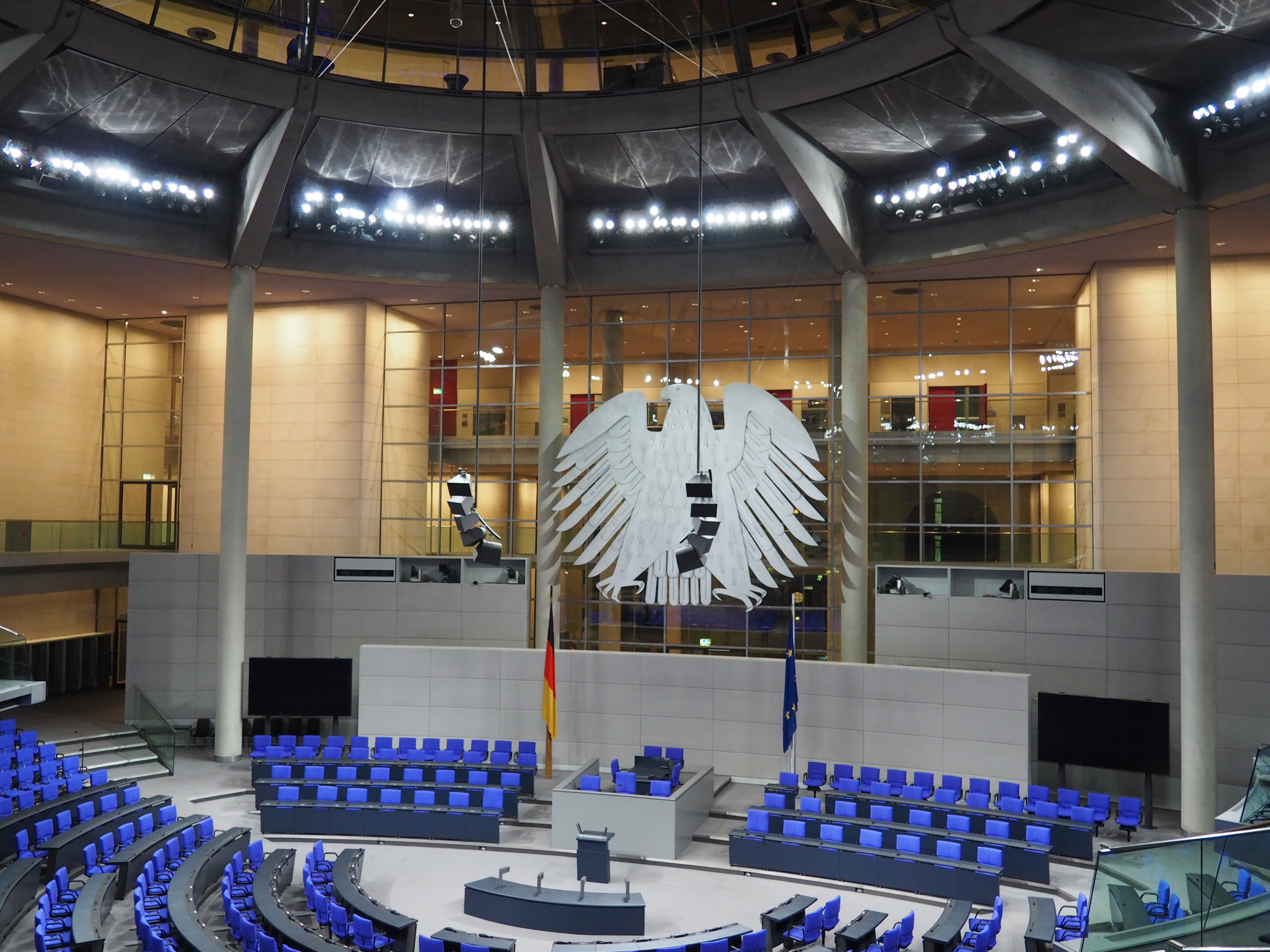
Germany is a parliamentary democracy where executive power flows from the legislature. The prime minister leads the government based on a parliamentary majority, while the president typically serves a more ceremonial role — making legislative elections the primary driver of political change. The system operates through 3 tracked political offices and 3 institutions, which collectively define how authority is exercised, checked, and transferred.
Political Parties
All 62 partiesAction Citizen for Justice
political party in Germany
Alliance 90/The Greens
German green party combining environmentalism, social liberalism, and pro-European politics.
Alliance '90/The Greens
green political party in Germany
Alliance C – Christians for Germany
political party
Alliance for Thuringia
electoral alliance in Germany
Alsace-Lorraine Party
Political party in the German Empire
Related Scenarios
germany
What happens if the German Bundestag passes a constructive vote of no confidence?
→Germany's Basic Law requires the Bundestag to simultaneously elect a successor when removing a chancellor — a mechanism designed to prevent the governmental instability that plagued the Weimar Republic.
united states
What happens if the U.S. invokes NATO Article 5?
→Article 5 is NATO's collective defence clause — an attack on one member is considered an attack on all. It has been invoked only once, by the United States after the September 11, 2001 attacks.
Frequently Asked Questions
- What type of government does Germany have?
- Germany is a federal parliamentary republic. Executive power is held by the chancellor and cabinet, who are accountable to the Bundestag. The federal president is the ceremonial head of state.
- Who is the current chancellor of Germany?
- Friedrich Merz (CDU) became Chancellor of Germany in 2025 after the CDU/CSU won the February 2025 federal election.
- What are the major political parties in Germany?
- The main parties are the CDU/CSU (centre-right), SPD (centre-left), Greens, FDP (liberal), AfD (right-wing populist), and BSW (left-conservative). Die Linke has declined significantly.
- How does the German electoral system work?
- Germany uses a mixed-member proportional system. Voters cast two votes: one for a direct constituency candidate and one for a party list. Parties must clear a 5% threshold to enter the Bundestag.
- What is a German coalition government?
- Because no single party usually wins a majority, German governments are formed through coalition agreements between two or more parties, negotiated after each federal election.
- Who leads Germany?
- Key political offices in Germany include Chancellor of Germany, Federal Chancellor of Germany, president of Germany. These offices shape how executive, legislative, and judicial authority is exercised in the country.
Verdict: Germany operates as a federal parliamentary republic where the chancellor leads the government through coalition agreements.
Germany is a federal parliamentary republic. The chancellor is the head of government and is elected by the Bundestag (federal parliament). Germany's political system is built around coalition governments, with the CDU/CSU and SPD historically alternating as the leading parties. Friedrich Merz (CDU) became chancellor in 2025.
This page covers Germany's federal system, coalition politics, the Bundestag, and the transition to the Merz government after the 2025 election.
Power Snapshot
Germany is rapidly increasing defense spending as part of its Zeitenwende security pivot in response to the war in Ukraine.
Germany
- Military Strength
- High
- Defense Budget
- ~$67 billion
- Active Personnel
- ~183,000
- Global Influence
- High
Key insight: Germany is rebuilding military capacity through its Zeitenwende defense pivot and a special €100 billion fund announced in 2022.
Defense spending uses SIPRI-backed 2024 estimates; personnel uses IISS-backed counts.
Keep Exploring
Recommended Reading
The Shortest History of Germany
James Hawes
A fast, vivid survey of Germany's political story from Caesar to Merkel.
View on AmazonIron Curtain
Anne Applebaum
How Soviet control was imposed on Eastern Europe after World War II.
View on AmazonThe English Constitution
Walter Bagehot
The classic account of how Britain's unwritten constitution actually works.
View on AmazonPutin's People
Catherine Belton
How the KGB recaptured Russia and then extended its reach into the West.
View on AmazonAs an Amazon Associate, PoliticaHub earns from qualifying purchases.
Connections
Institutions
Offices
Trust & Coverage
- Page Type
- Country
- Last Updated
- March 21, 2026
- Sources
- Graph-backed
- Data Coverage
- Comprehensive(85/100)
Country data is assembled from structured entity records, election results, and office timelines.
You Might Also Explore
Action Citizen for Justice
political party in Germany
Alliance 90/The Greens
German green party combining environmentalism, social liberalism, and pro-European politics.
Alliance '90/The Greens
green political party in Germany
Alliance C – Christians for Germany
political party
Alliance for Thuringia
electoral alliance in Germany
Alsace-Lorraine Party
Political party in the German Empire