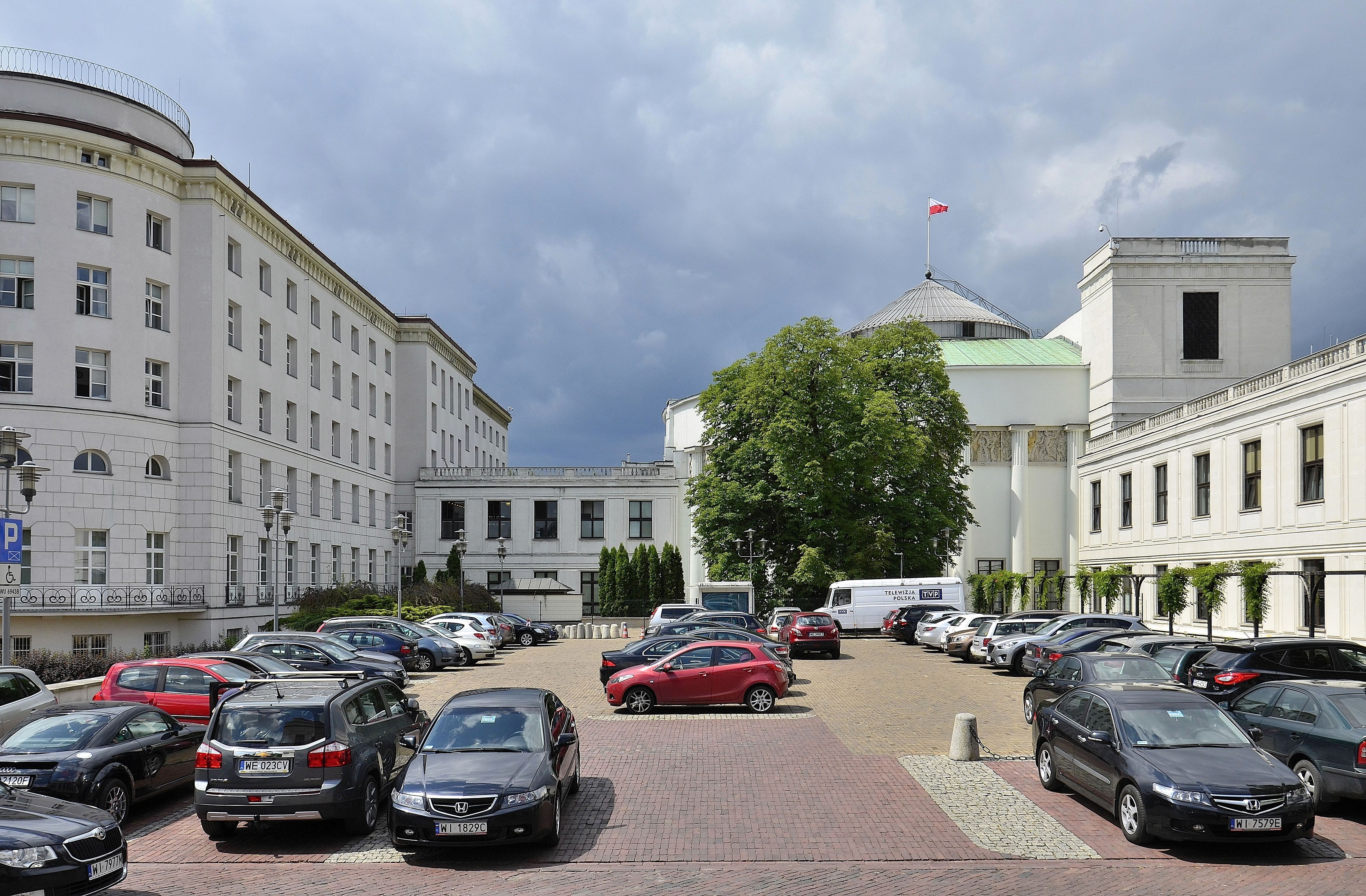
Poland is one of the sharpest cases in Europe of a democracy arguing over its own rules while also sitting on the continent's main security fault line. The country is not just divided over policy. It is divided over the courts, the media, the state, the nation, and what democratic restoration is supposed to look like after institutional damage has already been done.
The Rules Became The Main Political Fight
Poland became one of Europe's most important democratic test cases when political competition stopped being only about taxes, welfare, and social values and became a fight over the constitutional order itself. Courts, public media, prosecutorial independence, and the relationship with the European Union all moved from the legal background into the center of politics. Once that happens, every election starts to feel existential because the losers do not just lose office. They fear losing the framework within which politics is supposed to be played.
That is why Poland matters well beyond its size. It showed how quickly a government with a parliamentary majority can hollow out liberal-democratic safeguards without abolishing elections. It is now showing how difficult it is to repair those safeguards once the institutions have already been repopulated, politicized, or discredited. Restoring a damaged constitutional order is much harder than defending an intact one.
Why The Presidency And Courts Still Jam The System
Poland's semi-presidential structure matters most when rival camps control different parts of the state. A president with veto power can slow or block a parliamentary majority, especially when the governing coalition does not have the numbers to override objections cleanly. That turns constitutional repair into trench warfare rather than a straightforward electoral handover.
The deeper problem is that the courts themselves became part of the conflict. Once a constitutional tribunal, judicial council, and public institutions are filled under disputed conditions, there is no easy button for resetting legitimacy. Every attempt at restoration can be described by one side as necessary cleanup and by the other as another abuse. Poland is living inside that trap now.
This Is Also A Cultural And Geographic Divide
Poland's divide is partly ideological, but it is also social, geographic, and civilizational in the eyes of the people living it. Law and Justice built enduring support among voters who felt culturally disdained by liberal elites, attached to the Church, skeptical of Brussels, and attracted to a stronger redistributive state. Its opponents drew support from larger cities, more pro-European constituencies, younger voters, and people who saw independent institutions as essential protection against majoritarian overreach.
That is why Poland cannot be reduced to a technocratic rule-of-law story. The legal conflict sits on top of a much deeper argument about identity, sovereignty, religion, and social prestige. One side believes it is defending liberal democracy. The other believes it is defending the nation against liberal capture. Until that underlying argument cools, institutional peace will remain hard to rebuild.
What To Watch
Watch whether institutional restoration becomes durable settlement or endless retaliation. If every new governing majority treats the state as territory to be retaken, then Poland may remain electorally competitive while constitutionally unstable.
Also watch security and demography. Russia's war against Ukraine pushed Poland to the center of European defense, which gives Warsaw strategic weight even when its domestic politics are turbulent. At the same time, labor shortages, emigration, and cultural unease around immigration are slowly changing a society that long imagined itself as more homogeneous than it now is.
Political Architecture
How Poland Is Structured
The executive, legislature, elections, parties, and institutions that make up Poland's political system — and how they connect.
Dig Deeper
Political Parties
All 187 partiesAction of Disappointed Retirees and Pensioners
Polish political party
Agreement
political party in Poland
AGROunia
agrarian socialist movement in Poland
Alliance for Poland
political party in Poland
Alliance for the Future (Poland)
political party in Poland
Ancestral Home
political party in Poland
Frequently Asked Questions
- What type of government does Poland have?
- Poland is a unitary state. This system defines how executive, legislative, and judicial power is organized and exercised in the country.
- Who leads Poland?
- Key political offices in Poland include President of the Republic of Poland, Prime Minister of Poland. These offices shape how executive, legislative, and judicial authority is exercised in the country.
- What is the capital of Poland?
- The capital of Poland is Warsaw. As the seat of government, the capital is where the country's major political institutions and decision-making bodies are headquartered.
- What are the major political parties in Poland?
- Poland has 187 notable political parties, including Action of Disappointed Retirees and Pensioners, Agreement, AGROunia, Alliance for Poland, Alliance for the Future (Poland). Party competition is central to how political power is distributed — electoral outcomes and coalition dynamics directly determine who governs and what policies are implemented.
- What is the population of Poland?
- Poland has a population of approximately 37.6 million. Population size affects the country's representation in international bodies, electoral district sizing, and the scale of its political institutions.
- Why does Poland's political system matter?
- Poland's system matters because of the country's economic weight, military capability, and influence in international affairs. The way power is structured in Poland — through its unitary state framework — directly affects global trade, security alliances, and diplomatic outcomes that extend far beyond its borders.
Recommended Reading
The English Constitution
Walter Bagehot
The classic account of how Britain's unwritten constitution actually works.
View on AmazonHow Britain Really Works
Stig Abell
A sharp, modern overview of British institutions — from the NHS to Parliament.
View on AmazonPutin's People
Catherine Belton
How the KGB recaptured Russia and then extended its reach into the West.
View on AmazonThe New Tsar
Steven Lee Myers
The definitive biography of Vladimir Putin's rise and rule.
View on AmazonAs an Amazon Associate, PoliticaHub earns from qualifying purchases.
Connections
Trust & Coverage
- Page Type
- Country
- Last Updated
- March 21, 2026
- Sources
- 2 linked
- Data Coverage
- Comprehensive(85/100)
Country data is assembled from structured entity records, election results, and office timelines.
You Might Also Explore
Action of Disappointed Retirees and Pensioners
Polish political party
Agreement
political party in Poland
AGROunia
agrarian socialist movement in Poland
Alliance for Poland
political party in Poland
Alliance for the Future (Poland)
political party in Poland
Ancestral Home
political party in Poland